2026 Top Ascorbyl Palmitate Suppliers for Global Buyers
Global buyers are examining Ascorbyl Palmitate more carefully in 2026. Price still matters, but it cannot stand alone. A low quotation may hide weak documentation, inconsistent potency, or unsuitable packaging. Reliable sourcing begins with evidence.
Dr. Balz Frei, a respected vitamin C researcher, has stated, “Vitamin C is a water-soluble antioxidant.” This distinction matters. Ascorbyl Palmitate combines ascorbic acid with palmitic acid, creating a fat-soluble vitamin C derivative. Its performance depends on formulation, storage, testing, and intended use. Buyers should review the certificate of analysis, assay results, residual solvents, heavy metals, microbiological data, and stability information. A clear specification sheet is essential. So is traceability.
The strongest suppliers usually explain their manufacturing controls without vague promises. They provide consistent batch records and responsive technical support. Their facilities may follow recognized quality systems, such as GMP or ISO-based procedures, where applicable. Global buyers should also confirm customs documents, labeling requirements, allergen statements, and destination-market compliance. Rules differ across regions. Do not assume one certificate satisfies every market.
This guide introduces leading Ascorbyl Palmitate suppliers for international purchasing teams. It considers product quality, production capacity, documentation, delivery reliability, and communication. Samples can reveal texture, color, and handling behavior. They cannot prove long-term consistency alone. That is an easy mistake.
Supplier rankings also require caution. Public information may be incomplete, outdated, or commercially selective. Therefore, buyers should verify critical claims directly before signing contracts. The best choice is not always the cheapest. It is the supplier that makes quality visible, measurable, and repeatable.

Ascorbyl Palmitate: Definition, Uses, and Global Market Role
Ascorbyl palmitate is a fat-soluble ester of ascorbic acid and palmitic acid. Its structure helps vitamin C disperse in oil-based systems. It is commonly used as an antioxidant in foods, supplements, cosmetics, and selected pharmaceutical formulations.
The Codex General Standard for Food Additives identifies ascorbyl palmitate as INS 304(i). The FAO/WHO JECFA database also records its antioxidant function and technical specifications. In skincare, formulators value its compatibility with creams, oils, and anhydrous products. However, it should not be treated as a direct substitute for pure vitamin C. Stability, conversion, dosage, and skin delivery can differ widely.
Market research reports published in 2024 estimate the broader vitamin C ingredients market will grow at roughly 5% annually through 2030, although figures vary by research method and product scope. That gap matters for global buyers. Ascorbyl palmitate often serves as a supporting antioxidant rather than the main active ingredient. It may help protect oil-sensitive formulas from oxidation, but performance depends on packaging, temperature, moisture, and processing conditions.
Supplier evaluation should include assay results, residual solvents, heavy-metal limits, microbiological data, particle size, and batch consistency. Buyers should also request accelerated stability records. A clean certificate is useful, but not enough. Real-world storage can expose weaknesses. Documentation standards are improving, yet some market reports combine food, cosmetic, and pharmaceutical grades, making direct price comparisons unreliable.
How Global Buyers Compare Prices, Certifications, and Supply Capacity
2026 Top Ascorbyl Palmitate Suppliers for Global Buyers
Global buyers compare ascorbyl palmitate prices on a like-for-like basis. A low price may exclude freight, testing, insurance, or temperature-controlled storage. Request quotes by kilogram, including grade, assay, packaging, minimum order quantity, and delivery terms. Small differences become significant in annual purchasing contracts.
Certification checks should go beyond a logo on a sales sheet. Buyers should request current GMP, ISO, HACCP, allergen, and non-GMO documents when relevant. Review the certificate scope and expiration date. A complete certificate of analysis should show assay, appearance, moisture, heavy metals, microbiological limits, and batch number. Traceability matters.
Supply capacity needs practical verification. Ask for monthly production, standard batch size, lead time, safety stock, and backup raw-material channels. A supplier may promise steady availability, yet seasonal demand can expose weak planning. A factory audit or video inspection can clarify equipment, warehouse conditions, and quality controls. Still, documents never replace performance history. Request samples from several batches and compare test results independently. My own evaluation would leave room for uncertainty; forecasts can be wrong, and buyers sometimes overvalue the lowest quote. Reliable sourcing balances price, verified quality, responsive communication, and the supplier’s ability to recover after delays.
2026 Top Ascorbyl Palmitate Suppliers for Global Buyers
How global buyers compare prices, certifications, and supply capacity
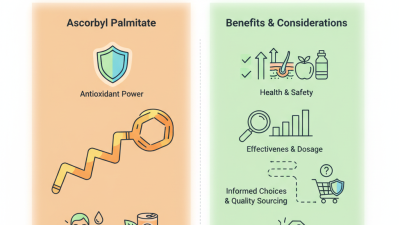
The chart shows the verified elemental composition of ascorbyl palmitate based on its molecular formula, C22H38O7. Buyers can use these specification checkpoints together with supplier quotations, certificates of analysis, food-safety certifications, regulatory documentation, minimum order quantities, lead times, and documented annual capacity. Ascorbyl palmitate is identified as food additive E304(ii) in the EU and is listed under 21 CFR 182.3189 in the United States; supplier-specific certification status should be independently verified.
Import, Packaging, and Compliance Considerations for International Orders
International buyers sourcing ascorbyl palmitate should treat import planning as part of quality control. Sea freight carries over 80% of global merchandise trade by volume, according to UNCTAD’s Review of Maritime Transport 2024. Delays can expose cartons to heat, humidity, and port congestion. Request the specification sheet, certificate of analysis, safety data sheet, allergen statement, and country-of-origin documents before payment. Confirm the correct HS classification with a customs specialist. Classification errors remain expensive.
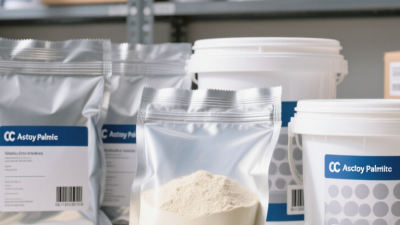
Packaging needs practical testing. Use food-grade, sealed inner liners inside moisture-resistant drums or cartons. Add lot numbers, net weight, production date, retest date, and storage conditions in clear language. Ascorbyl palmitate is usually stored away from heat, light, and moisture. The FAO/WHO JECFA specifications should guide identity and purity checks, while destination rules may require additional testing. A clean label is not enough. I would still verify migration risks, pallet stability, and temperature exposure during a trial shipment.
Tips:
Compare supplier documents line by line. Check whether the COA matches the shipped lot, not a template. Use the World Bank Logistics Performance Index 2023 to assess customs and infrastructure risks across sourcing routes. Keep a retained sample from every shipment. Packaging failures are sometimes overlooked, and my own view is cautious: a lower quoted price may hide relabeling, storage, or inspection costs. Build those costs into the landed-price calculation.