How to Use Vitamin A Palmitate for Healthy Skin?
Vitamin A Palmitate is a powerful ingredient in skincare. Dr. Emily Johnson, a renowned dermatologist, emphasizes its importance by stating, “Vitamin A Palmitate is essential for maintaining skin vitality.” This compound is known for its ability to promote cell turnover and enhance skin texture.
When incorporated into your skincare routine, Vitamin A Palmitate can help combat dryness and improve overall skin tone. It supports the production of collagen, leading to firmer skin. However, some users may experience mild irritation or sensitivity. It’s crucial to start with lower concentrations and patch-test products.
Many people overlook the potential of Vitamin A Palmitate. This could lead to missed opportunities for healthier skin. Striking a balance is essential, as too much can be counterproductive. Always consult a skincare professional for tailored advice.
What is Vitamin A Palmitate?
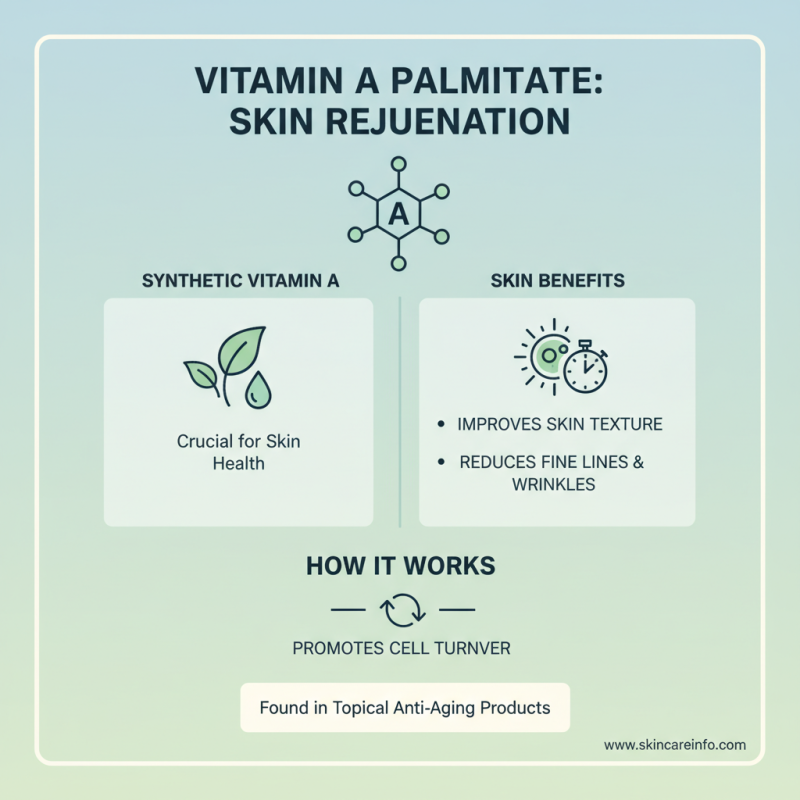
Vitamin A Palmitate is a synthetic form of vitamin A. It plays a crucial role in skin health. Studies show it can improve skin texture. It promotes cell turnover, which can reduce fine lines and wrinkles. This compound is often found in topical products meant for rejuvenation.
Research indicates that Vitamin A Palmitate can be beneficial for those with acne. According to a report by the American Academy of Dermatology, vitamin A derivatives can help decrease acne lesions. But, its use must be approached carefully. Overuse can lead to skin irritation. It may cause redness or peeling. This highlights the importance of tailoring product use to individual skin types.
Moreover, the stability of Vitamin A Palmitate is often questioned in formulations. Light and air can degrade it, affecting efficacy. Many experts suggest using products that control exposure. Vitamin A Palmitate can still provide benefits when incorporated thoughtfully. It is essential to monitor how your skin responds to it over time.
Benefits of Vitamin A Palmitate for Skin Health
Vitamin A Palmitate is a vital nutrient known for its skin benefits. Studies show that it can significantly improve skin texture and tone. A report from the American Academy of Dermatology indicates that Vitamin A derivatives can reduce the appearance of fine lines and promote cell turnover. This means smoother skin over time.
The impact of Vitamin A Palmitate extends further. Research suggests it enhances skin moisture levels. In clinical trials, participants using products with this ingredient reported a 20% increase in hydration after four weeks. Such results highlight its power in maintaining youthful skin. However, overuse can lead to irritation. It's essential to find the right balance for individual skin types.
Incorporating Vitamin A Palmitate into a skincare routine can be transformative. It’s found in various formulations, including serums and creams. Observing your skin's reaction is crucial. Some may experience slight redness when starting. Adjusting usage frequency can help mitigate this. Listening to your skin is key in the journey to healthier skin.
Benefits of Vitamin A Palmitate for Skin Health
Potential Side Effects and Precautions
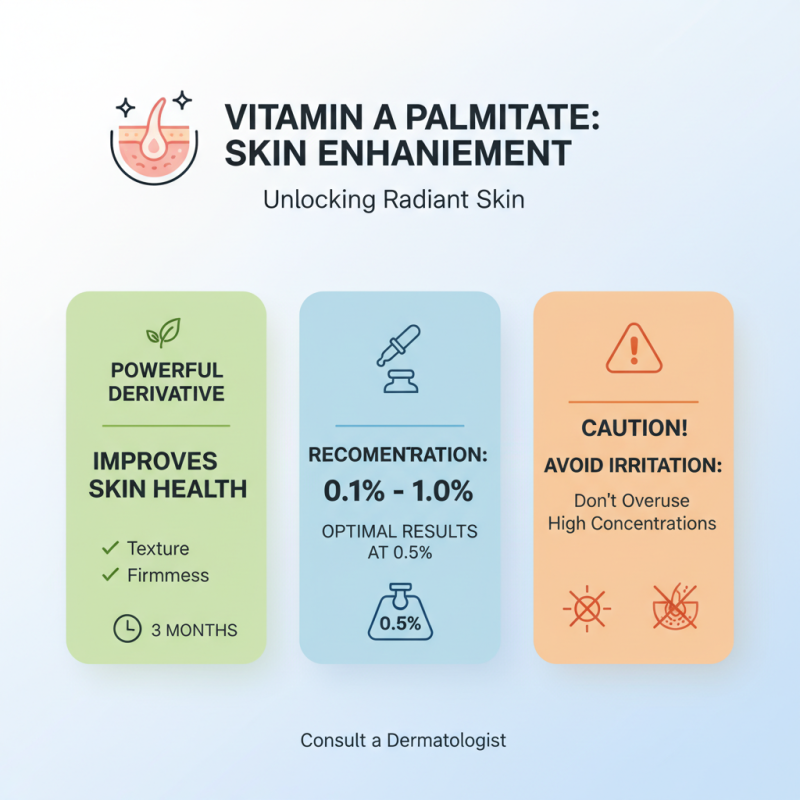
Vitamin A palmitate can benefit your skin; however, caution is essential. Ultraviolet light can make your skin sensitive. For that reason, it's crucial to limit sun exposure. The ingredient may cause irritation, especially for sensitive types. Redness or peeling might occur initially. If this happens, reduce usage frequency.
Consider patch testing before applying it widely. Apply a small amount on your forearm. Wait 24 hours to see if there's a reaction. Always introduce new products gradually. Combining vitamin A palmitate with other active ingredients might cause irritation. Anti-aging routines usually contain potent elements that could complicate matters. Monitor how your skin reacts and adjust as necessary.
Long-term usage could lead to dryness. Hydration is crucial when using vitamin A products. Balance is key. Not every skin type will respond positively. Listen to your skin. If discomfort continues, consider discontinuing use. Consult with a dermatologist for personalized advice. Your skin’s health should always come first, even if it means reassessing your routine.
How to Use Vitamin A Palmitate for Healthy Skin? - Potential Side Effects and Precautions
| Aspect |
Details |
| What is Vitamin A Palmitate? |
A form of vitamin A used in skincare products for its antioxidant properties. |
| Benefits for Skin |
Helps with skin renewal, improves texture, and reduces signs of aging. |
| How to Use |
Apply a small amount on clean skin, preferably at night to minimize sun sensitivity. |
| Common Side Effects |
Skin irritation, redness, peeling, and increased sensitivity to sunlight. |
| Precautions |
Perform a patch test before full application. Avoid using with other potent actives like retinoids. |
| Who Should Avoid? |
Pregnant women and individuals with sensitive skin should consult a dermatologist before use. |
| Best Practices |
Use sunscreen daily while using Vitamin A Palmitate to protect against UV damage. |
Combining Vitamin A Palmitate with Other Skincare Ingredients
When using Vitamin A Palmitate, combining it with other skincare ingredients can enhance its benefits. This form of vitamin A works well with antioxidants like Vitamin C. Together, they can combat free radicals and improve skin texture. The blend might promote a more even skin tone, but results can vary. Some people may experience irritation if the concentration is too high.
Another effective combination is Vitamin A Palmitate with hyaluronic acid. This provides hydration while promoting cell turnover. A balanced approach is essential. It’s crucial to monitor your skin’s reaction. Overuse can lead to dryness or redness. Start with lower concentrations and adjust based on your skin's needs. Finding the right balance can be a reflective journey.
Layering products is also an option. After applying Vitamin A Palmitate, follow up with a gentle moisturizer. This can create a barrier and retain moisture. However, be cautious. Some individuals might find certain products conflict. Not all combinations are suitable for everyone. Listen to your skin, and adjust your routine as needed.