Understanding All Trans Retinal and Its Role in Vision and Health?
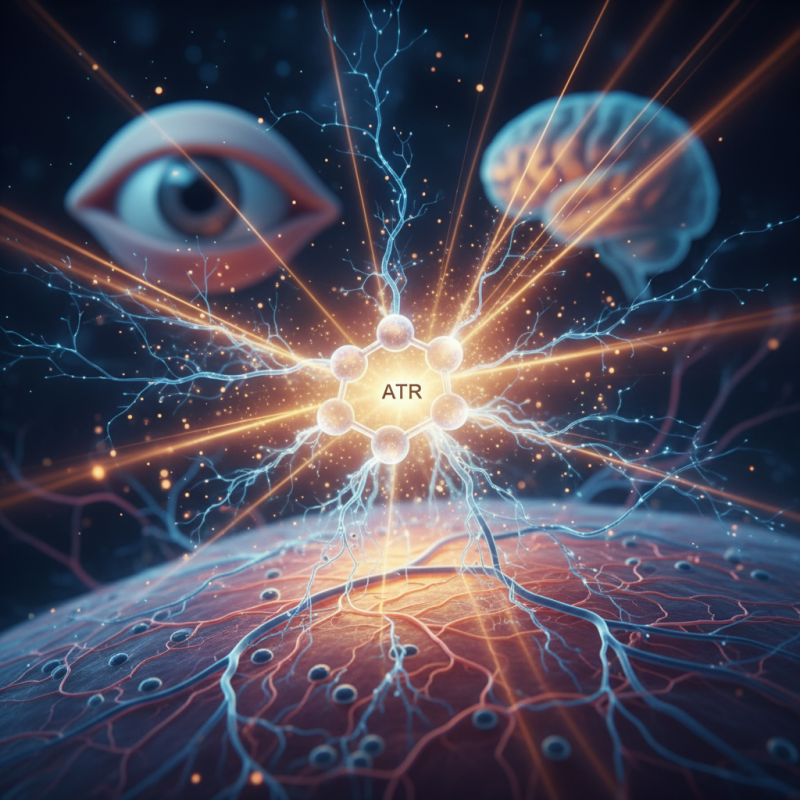
All Trans Retinal (ATR) is a critical molecule in the visual process. It plays a vital role in converting light into neural signals. These signals enable us to perceive the world around us. Understanding ATR is crucial for both vision and overall health.
Researchers have long studied ATR's impact on the retina. This molecule is formed during the conversion of light and is essential for vision. Deficiencies in ATR are linked to various eye disorders. These include night blindness and age-related macular degeneration.
Despite its importance, many people remain unaware of ATR's role. Education about these biochemical processes can empower individuals to take charge of their eye health. A lack of knowledge can lead to preventable vision loss. Understanding ATR is an ongoing journey, one that blends science with our daily lives.
What is All Trans Retinal?
All Trans Retinal (ATR) is a vital molecule in the visual process. It originates from the breakdown of retinal, a form of vitamin A. In photoreceptor cells, ATR plays a crucial role in transforming light into electrical signals. This transformation is essential for vision and occurs in the retina. When light hits photoreceptor cells, ATR undergoes a chemical change. This change initiates the signaling pathway that ultimately leads to visual perception.
Beyond its primary role in vision, ATR has implications for overall health. Research suggests that ATR may influence metabolic processes and may even play a role in various eye diseases. For instance, deficiencies or imbalances in retinal levels can lead to vision problems. Some studies indicate that maintaining healthy ATR levels could help in preventing degenerative conditions. However, the complete understanding of ATR's functions is still evolving, creating a space for further exploration.
Despite its significance, the complexity of ATR's pathways leaves room for questions. The exact mechanisms by which ATR impacts health are not fully understood. Further research is needed to uncover its various roles and potential therapeutic applications. Understanding ATR could open new doors for improving vision and health.
The Biochemical Pathway of All Trans Retinal in Vision
All-trans retinal (ATR) plays a pivotal role in vision, influencing how we perceive light. This compound is a key part of the visual cycle, converting light into biochemical signals. When light hits the retina, ATR forms from a molecule called retinaldehyde, initiating a cascade of reactions that eventually leads to visual perception. This transformation occurs in photoreceptor cells, where ATR interacts with proteins to generate a nerve impulse.
Understanding this pathway adds depth to our knowledge of eye health. However, it's essential to recognize that imbalances in ATR levels can potentially lead to vision-related issues. Studies suggest that excessive or insufficient ATR may disrupt sight. Research continues to explore this balance, looking for ways to harness ATR’s properties without triggering negative effects.
**Tips:** Ensure you maintain a balanced diet high in vitamins A and E. These nutrients support retinal health and may influence ATR levels positively. Regular eye check-ups are crucial for early detection of potential complications. Be mindful of exposure to extreme light, which can affect retinal health.
The Role of All Trans Retinal in Phototransduction
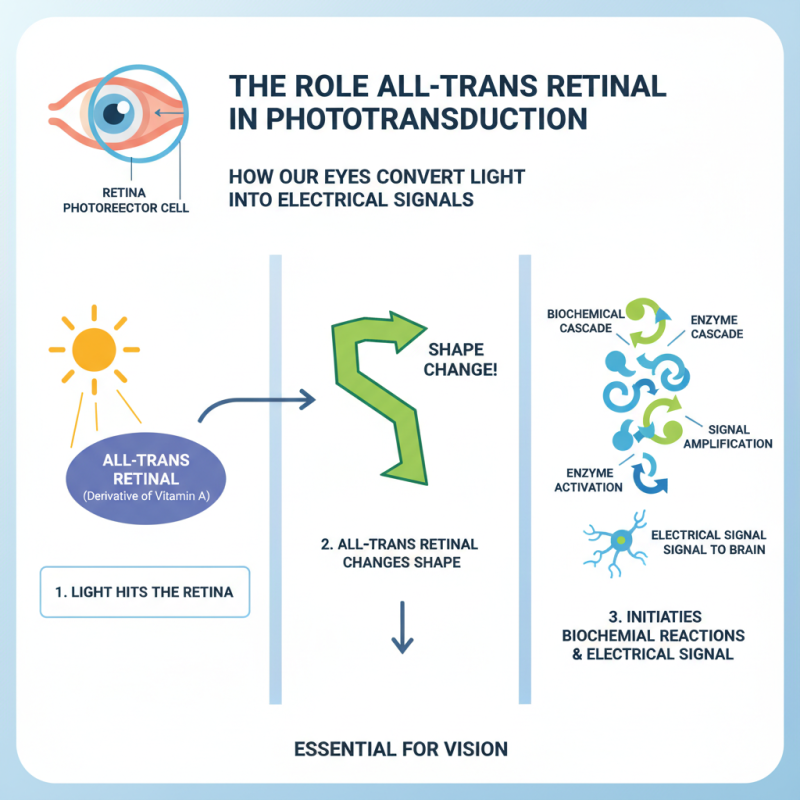
All-trans retinal plays a crucial role in the process of phototransduction. This is how our eyes convert light into electrical signals. Located in the photoreceptor cells of the retina, it is a derivative of vitamin A. When light hits the retina, all-trans retinal changes shape. This transformation initiates a series of biochemical reactions.
The interactions between all-trans retinal and proteins in photoreceptors are fascinating yet complex. These reactions lead to the closure of sodium channels, reducing ion flow. This reduction creates the electrical signal that ultimately travels to the brain. The brain interprets these signals into visual images. However, disruptions in this process can lead to vision problems.
Research shows that a lack of all-trans retinal can impair vision, demonstrating its importance. Some questions remain unanswered. For instance, how do other nutrients or disorders affect retinal health? Increasing our understanding of these mechanisms could improve vision-related therapies. Exploring these areas will help in building a more comprehensive view of eye health.
Health Implications of All Trans Retinal Deficiency
All trans retinal (ATR) plays a critical role in our vision. It is a derivative of Vitamin A and is essential for the visual cycle. When light hits the retina, ATR helps convert light signals into neural impulses. A deficiency in ATR can lead to serious health implications, particularly in vision.
Studies show that a lack of ATR can result in night blindness and blurred vision. Research published in the Journal of Vision indicates that nearly 5% of the population experiences visual impairment due to vitamin A deficiency, which directly affects ATR levels. Even mild deficiencies can disrupt visual health, leading to increased risk of age-related macular degeneration (AMD) and other retinal disorders.
Furthermore, ATR deficiency might impact overall health beyond vision. Researchers at the National Eye Institute found correlations between low ATR levels and systemic health issues such as immune dysfunction. This underscores the need for adequate Vitamin A intake to support both visual and overall health. Many people unwittingly overlook this vital nutrient, leaving room for potential health concerns. Simple dietary adjustments could ensure adequate ATR levels, promoting better long-term health outcomes.
Recent Research and Advances Related to All Trans Retinal
Recent studies have highlighted the critical role of all-trans retinal (ATR) in vision and overall health. ATR is a key molecule in the visual cycle, converting light into electrical signals in the retina. Research indicates that deficiencies in ATR can lead to vision disorders. A study published in the "Journal of Vision" found that individuals with low ATR levels experience slower visual processing speeds.
Another notable finding comes from a 2021 report by the Vision Research Society, stating that imbalances in ATR can impact retinal health. This imbalance could contribute to conditions such as age-related macular degeneration. Understanding these mechanisms helps in developing strategies for prevention and therapeutics.
Tips for maintaining optimal retinal health include regular eye examinations and a diet rich in antioxidants. Foods high in beta-carotene, such as carrots and sweet potatoes, may also support ATR levels. Staying hydrated further contributes to eye health, which is often overlooked. Keeping an eye on your health can lead to significant long-term benefits.
Understanding All Trans Retinal and Its Role in Vision and Health
| Research Focus |
Key Findings |
Health Implications |
Recent Advances |
Role in Vision
(Phototransduction) |
Essential for converting light into signals in photoreceptor cells. |
Deficiency linked to vision impairments like night blindness. |
New synthetic retinoids show potential for therapy. |
| Impact on Retinal Degeneration |
Accelerates photoreceptor cell death in certain conditions. |
Associated with diseases such as age-related macular degeneration (AMD). |
Gene therapy techniques are being explored for treatment. |
| Antioxidant Properties |
Acts to reduce oxidative stress in retinal tissues. |
May protect against cellular damage related to static and dynamic vision changes. |
Clinical trials are evaluating formulations with enhanced retinoid derivatives. |