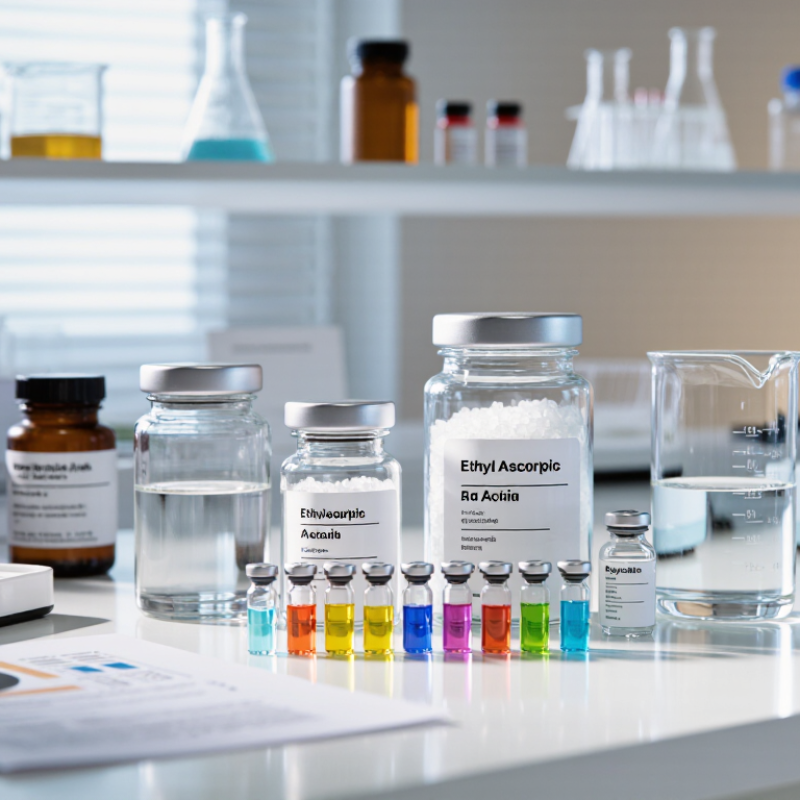
Sourcing Ethyl Ascorbic Acid requires more than comparing prices on a supplier website. The ingredient may appear under different names, grades, and purity claims. A dependable buyer should confirm the INCI name, CAS number, assay, appearance, recommended use level, and storage conditions. Request a recent Certificate of Analysis, Safety Data Sheet, and batch-specific test results. HPLC data is especially useful when verifying identity and purity. A clear specification reduces unpleasant surprises later.
Cosmetic chemist Perry Romanowski offers a practical reminder: “Do not buy an ingredient by its marketing name; verify what is actually in the container.” This principle fits Ethyl Ascorbic Acid sourcing closely. A supplier should explain its manufacturing location, batch traceability, testing laboratory, and packaging system. For example, a sealed, light-protective bag stored in a dry warehouse inspires more confidence than a vague “premium grade” label. Ask how the material was protected from humidity during transport. Small details matter.
Yet sourcing decisions are rarely perfect. A high assay does not automatically guarantee excellent performance in a finished serum. Compatibility with water, solvents, pH, preservatives, and packaging still requires laboratory evaluation. Stability testing may reveal discoloration, sediment, or declining activity after several weeks. I would also compare at least two qualified suppliers, because one attractive sample proves very little. Reliable sourcing means documenting each decision, checking current regional requirements, and testing the actual batch before production. Ethyl Ascorbic Acid deserves evidence, not enthusiastic promises.
Ethyl Ascorbic Acid is a stable vitamin C derivative used in skincare formulations. Its chemical name is 3-O-Ethyl Ascorbic Acid. Compared with pure ascorbic acid, it usually offers better stability against oxidation. This makes it easier to use in daily serums, lotions, and emulsions. It is often selected for brightening, antioxidant support, and a more even-looking skin tone.
The ingredient still needs careful formulation. A suitable pH, compatible preservatives, and protective packaging can affect its performance. I would review solubility, recommended use levels, color, odor, and stability data before approving a supplier. Small laboratory batches are useful. They can reveal unexpected crystallization or color changes. Ethyl Ascorbic Acid is not a miracle ingredient. Results may differ with concentration, skin condition, and the complete formula.
When sourcing it, request a current Certificate of Analysis, assay results, heavy metal limits, residual solvent data, and microbiological specifications. HPLC testing can help confirm identity and purity. Ask for batch traceability and storage instructions as well. Moisture, heat, and light may reduce quality during transport. A sealed, light-resistant package is preferable. I would also compare a supplier’s sample with an independent laboratory report, rather than trusting paperwork alone. A low price can look attractive, but inconsistent purity may create higher costs later. Supplier audits and clear cosmetic documentation support safer, more reliable purchasing decisions.
Before sourcing Ethyl Ascorbic Acid, define what your formula actually needs. Do not begin with the lowest quoted price. Set a target assay, appearance, odor, particle size, and solubility range. Confirm whether the ingredient suits a water-based serum, cream, or an anhydrous product. These details affect processing and consumer experience.
Request a current Certificate of Analysis, specification sheet, safety data, and batch traceability records. Check test methods, not only reported values. Ask about residual solvents, heavy metals, microbial limits, and stability data. Packaging also matters. Moisture-sensitive material needs sealed, light-protective containers. Define the required quantity, minimum order, lead time, and storage conditions before requesting quotations. A sample should pass your own compatibility testing. Supplier documents are useful, but they are not your final quality decision.
Tips: Write requirements in a one-page sourcing brief. Include acceptable limits and rejection criteria. Ask for a recent production batch, not only a laboratory sample. Compare at least three qualified suppliers. Keep records of every revision.
A perfect specification is rarely practical. Tight limits may increase cost without improving the finished product. I have seen teams overlook color changes during storage because the initial powder looked acceptable. That mistake is avoidable. Test accelerated stability, packaging interaction, and performance at the intended use level. Also review whether the supplier can maintain the same quality across multiple batches. Consistency is often more valuable than an impressive first sample.
How to Source Ethyl Ascorbic Acid for Skincare?
Finding a qualified ethyl ascorbic acid supplier requires more than checking a low quotation. Start with the ingredient specification and define the required assay, appearance, solubility, packaging, and storage conditions. Ask for a recent certificate of analysis, safety data sheet, product specification, and batch traceability records. Documents matter.
Request samples from at least three suppliers. Compare the powder’s color, odor, dispersibility, and performance in a controlled laboratory formula. Review assay testing methods, heavy metal limits, residual solvents, and microbiological results. Independent verification can reveal gaps between a certificate and the actual batch.
Supplier experience also deserves close attention. Ask about manufacturing controls, quality audits, production capacity, minimum order quantities, and typical lead times. A reliable supplier should explain how the material is protected from moisture, heat, and excessive light during storage and shipping. Packaging should be sealed and clearly labeled.
Do not judge technical quality from polished paperwork alone. I have seen specifications that looked complete but lacked a clear retest period. That detail can affect inventory decisions. Price comparisons should include testing costs, freight, rejected-batch procedures, and payment terms. Communication is another practical test. Slow or vague replies may create problems during scale-up.
A useful comparison sheet can score quality, documentation, consistency, service, and total cost separately. Keep samples, test reports, and approval records together. The best supplier is not always the cheapest. Sometimes the stronger choice is the one that admits limitations and answers difficult questions clearly.
| Evaluation Dimension | Verified Technical Reference | What to Request from Suppliers | How to Compare Qualification |
|---|---|---|---|
| Ingredient Identity |
|
Request the product specification, identity-testing method, CAS number, molecular formula, and a representative Certificate of Analysis (CoA). | The supplier documentation should match the requested chemical identity and should not describe a blended vitamin C derivative or a premixed cosmetic solution. |
| Assay and Purity | Cosmetic-grade material is commonly offered with an assay specification of 98.0% or higher, although the exact limit depends on the supplier and test method. | Ask for the release specification, actual batch result, analytical method, and whether the assay is reported on an anhydrous or as-is basis. | Compare both the specification limit and the actual result on recent batches. A higher stated assay is not meaningful unless the test method and reporting basis are clear. |
| Appearance and Physical Form | Typically supplied as a white to off-white crystalline powder. Color variation can be influenced by processing, storage, and exposure to heat or moisture. | Request appearance standards, photographs of the packed material, particle-size information, and any caking or discoloration limits. | Prefer a supplier that defines visual acceptance criteria and can provide a retained sample from the same production lot offered for purchase. |
| Solubility and Formulation Use | 3-O-Ethyl Ascorbic Acid is used as a stabilized vitamin C derivative in cosmetic formulations and is generally incorporated into aqueous or water-containing systems according to the supplier’s technical guidance. | Request solubility data in water and commonly used cosmetic solvents, recommended addition temperature, suggested pH range, and compatibility guidance. | Compare data generated under the same conditions, including temperature, concentration, mixing time, and pH. Do not rely only on a generic “water-soluble” claim. |
| pH and Stability Data | Stability is affected by pH, heat, light, oxygen, water activity, and packaging. A finished-product pH target should be established through formulation testing rather than assumed from the raw-material name. | Ask for accelerated-stability data, recommended storage conditions, pH-dependent stability information, and handling instructions after opening. | Give priority to suppliers that provide time-point data and test conditions instead of unsupported shelf-life statements. |
| Contaminant Controls | Relevant controls may include heavy metals, residual solvents, elemental impurities, microbial quality, and other process-related impurities. | Request limits and batch results for lead, arsenic, mercury, cadmium, residual solvents, total aerobic microbial count, yeast and mold, and specified pathogens where applicable. | Check that the limits are stated numerically, the units are clear, and the testing is performed by a qualified laboratory using recognized or validated methods. |
| Documentation Package | A professional cosmetic-ingredient supply package commonly includes a CoA, Safety Data Sheet, technical data sheet, specification, allergen statement, and country-of-origin information. | Request current documents before purchase and confirm that the legal ingredient name, product code, lot number, revision date, and manufacturer or responsible supplier are consistent. | Reject documents that are undated, generic, copied across different products, or unable to link the test results to a specific production lot. |
| Manufacturing and Quality Systems | Quality systems such as ISO 9001, cosmetic GMP practices, change control, deviation management, and traceability support consistent raw-material quality. | Ask for available quality certificates, audit summaries, manufacturing-site details, change-notification procedures, and recall or complaint-handling processes. | Certification alone is not sufficient. Verify the certificate scope, validity period, issuing body, and whether it covers the actual manufacturing site. |
| Packaging and Storage | The powder should be protected from moisture, excessive heat, and direct light. Packaging may include sealed inner liners within fiber, plastic, or other compatible outer containers. | Request container material, net weight, tamper evidence, recommended storage temperature, humidity precautions, and post-opening handling instructions. | Compare packaging integrity, moisture protection, lot labeling, and whether the proposed pack size matches expected consumption before the retest or expiry date. |
| Shelf Life and Retest Policy | Shelf life is product- and packaging-specific and must be supported by the supplier’s stability program. It should not be inferred solely from the chemical structure. | Ask for the original manufacturing date, expiry or retest date, stability protocol, and minimum remaining shelf life at shipment. | Compare usable shelf life at delivery, not only the nominal shelf life from manufacture. Establish written procedures for retesting material past its retest date. |
| Sample and Pilot Evaluation | A laboratory sample cannot replace production-lot qualification. Differences in particle size, moisture, impurities, or processing history can affect formulation performance. | Request a representative sample, its matching CoA, lot number, recommended dosage information, and a sample quantity sufficient for compatibility and stability trials. | Test at least one production-intent lot for identity, appearance, assay, formulation behavior, and short-term stability before approving regular supply. |
| Commercial Terms | Minimum order quantity, lead time, payment terms, shipping conditions, and price are commercial variables and can change by region, pack size, and order volume. | Request a written quotation showing grade, specification, pack size, MOQ, lead time, Incoterms, validity period, shipping conditions, and any sample or testing charges. | Compare total delivered cost and supply reliability rather than unit price alone. Include customs, testing, freight, storage, and potential qualification costs. |
| Regulatory and Market Documentation | Requirements vary by destination market and product category. A raw-material supplier’s compliance statement does not automatically approve the finished cosmetic product. | Request country-of-origin, non-animal testing or vegan statements where relevant, allergen information, REACH-related information where applicable, and support for local cosmetic regulations. | Confirm that documents are relevant to the intended market and current product version. Conduct an independent regulatory review before commercialization. |
| Supplier Risk Rating | A qualified source should demonstrate consistent identity, batch-to-batch quality, traceability, technical support, and controlled change management. | Build a supplier scorecard covering documentation completeness, technical performance, quality history, responsiveness, capacity, logistics, and business continuity. | Use a weighted scoring model and approve a backup source where the ingredient is critical to product continuity. Requalify the supplier after major process or site changes. |
Qualification note: The numerical and identity references above are industry-oriented screening criteria, not a universal monograph. Final acceptance limits should be agreed in the purchasing specification and verified against the applicable cosmetic regulations, formulation requirements, and supplier batch data.
Sourcing Ethyl Ascorbic Acid for skincare requires more than checking the assay on a certificate. Ask for the exact chemical name, CAS number, manufacturing country, batch number, and retest date. A recent Certificate of Analysis should report identity, assay, appearance, water content, residual solvents, heavy metals, and microbiological limits. Request HPLC chromatograms, not only a pass statement. Small detail, but important.
Safety evidence should match the finished product. The SCCS Notes of Guidance, 12th revision, highlights concentration, exposure route, impurities, and consumer use patterns. Review the supplier’s toxicology package, including irritation and sensitisation information. OECD Test Guideline 439 uses a 50% tissue-viability threshold for skin irritation assessment. That result does not automatically prove complete product safety. Formulation matters. pH, packaging, light exposure, and storage temperature can change performance.
Documentation must support compliance in every intended market. Keep the SDS, technical data sheet, allergen statement, non-animal testing declaration, origin statement, and change-control history. Check the ingredient name against the relevant cosmetic inventory, then verify local notification and labeling requirements. ISO 16128 can help assess natural-origin claims, but it does not replace a safety assessment. I would also test a retained sample independently. Supplier paperwork can be accurate, yet incomplete. That uncomfortable gap deserves attention.
When sourcing ethyl ascorbic acid for skincare, request a representative sample, not a polished showcase batch. Check its appearance, odor, color, and dispersibility in your intended formula. Record the powder’s behavior at different temperatures. Small details matter.
Ask for a current specification sheet and certificate of analysis. Review assay, moisture, pH range, residual solvents, heavy metals, and microbiological limits. Confirm the testing methods and laboratory details. If the documents look copied or incomplete, pause. An independent test may protect your decision. I would also test three batches, because one sample can create false confidence. That lesson is easy to miss.
Negotiate with written targets. Discuss minimum order quantity, sample fees, production lead time, packaging size, shelf life, storage conditions, and replacement terms. Request sealed, light-protective packaging with batch identification. Clarify whether the quoted price includes transport, documentation, and inspection costs. Do not accept vague delivery promises. Before ordering, approve a signed specification and retain the tested reference sample. Place a small trial order first, then compare the delivered powder against your records. If the result differs, document it immediately and ask for a corrective plan. A low price is not a reliable saving when production stops.
A practical supplier-evaluation framework covering sample quality, documentation, commercial terms, and delivery readiness. The weights are a purchasing scorecard for comparing qualified samples.
How to use it: Request a representative sample and batch-specific COA, verify assay and identity through agreed testing, review stability and microbiological documents, then negotiate MOQ, lead time, payment terms, packaging, and replacement conditions before placing the order.