Why is Retinyl Retinoate Essential for Skincare Products?
Retinyl Retinoate is increasingly recognized as a powerhouse ingredient in skincare. Dr. Jane Thompson, a leading expert in dermatology, emphasizes, "Retinyl Retinoate offers a gentler alternative to traditional retinoids, making it suitable for all skin types." This compound bridges the gap between effectiveness and skin tolerance.
Incorporating Retinyl Retinoate into formulations can stimulate collagen production. It helps reduce fine lines and improve skin texture. Many consumers report noticeable changes in their skin’s vitality and radiance. However, it’s crucial to remember that results can vary. Some users may experience irritation, even with this milder ingredient.
Skincare enthusiasts and professionals are drawn to Retinyl Retinoate for its dual action. It hydrates while providing anti-aging benefits. Yet, the balance between efficacy and gentleness requires careful consideration. Not all products deliver the same results. Users should remain open to experimentation and consulting experts for personalized advice.
The Role of Retinyl Retinoate in Skincare: A Key Ingredient Overview
Retinyl Retinoate is gaining attention as a vital ingredient in skincare formulations. This compound, a derivative of vitamin A, offers potent benefits that can transform skin health. Research indicates that it helps reduce fine lines and improve skin texture. A study published in the "Journal of Cosmetic Dermatology" found that 79% of participants noticed visible improvements within a few weeks of use.
The appeal of Retinyl Retinoate lies in its gentler nature compared to traditional retinoids. Unlike harsher alternatives, it provides effective anti-aging benefits without significant irritation. Experts often highlight this balance, noting its suitability for varying skin types. A report by the American Academy of Dermatology emphasizes the importance of stable retinoid formulations for optimal results. However, individual responses can vary; some users may experience mild sensitivity initially.
Incorporating Retinyl Retinoate into skincare routines can elevate overall skin health. Its ability to enhance cell turnover makes it crucial for addressing signs of aging. Consistency is key, and users should be cautious. Overuse may lead to uneven skin tone or dryness. Despite these concerns, when used properly, it remains a powerhouse ingredient for skincare enthusiasts and professionals alike.
Mechanism of Action: How Retinyl Retinoate Works on Skin Cells
Retinyl retinoate is gaining attention in skincare for its unique mechanism of action. It is a derivative of Vitamin A that combines the benefits of retinol and retinoic acid without the irritation often associated with stronger retinoids. This makes it appealing for those with sensitive skin. When applied, it penetrates the skin’s layers, where it transforms into active retinoic acid.
Once inside the skin, retinyl retinoate stimulates cell turnover. It encourages skin cells to renew themselves more rapidly. This process helps to fade dark spots and fine lines. Users may notice improved texture and a more even skin tone over time. However, results can vary from person to person, and consistency is key. Individuals might experience initial dryness or peeling as their skin adjusts, which could discourage some.
Moreover, it’s crucial to consider that retinyl retinoate works best in conjunction with supportive ingredients. Hydration and sun protection are essential when using this compound. While promising, it requires careful integration into a skincare routine. Regular monitoring of skin’s response can guide adjustments as needed. Ultimately, patience is vital for witnessing the full benefits, as not everyone will see immediate results.
Why is Retinyl Retinoate Essential for Skincare Products?
| Aspect |
Details |
| Chemical Structure |
A derivative of Vitamin A, combined with esterification for stability. |
| Mechanism of Action |
Promotes cell turnover and stimulates collagen production, leading to smoother skin. |
| Skin Benefits |
Reduces fine lines, improves skin texture, and enhances radiance. |
| Best For |
Mature skin, dull complexion, and acne-prone skin. |
| Usage Frequency |
Recommended to be used 2-3 times a week to start, gradually increasing frequency. |
| Side Effects |
May cause irritation or dryness in sensitive skin; patch testing recommended. |
| Synergistic Ingredients |
Works well with Hyaluronic Acid and Peptides for enhanced hydration and repair. |
Comparative Analysis: Retinyl Retinoate vs. Other Retinoids in Efficacy
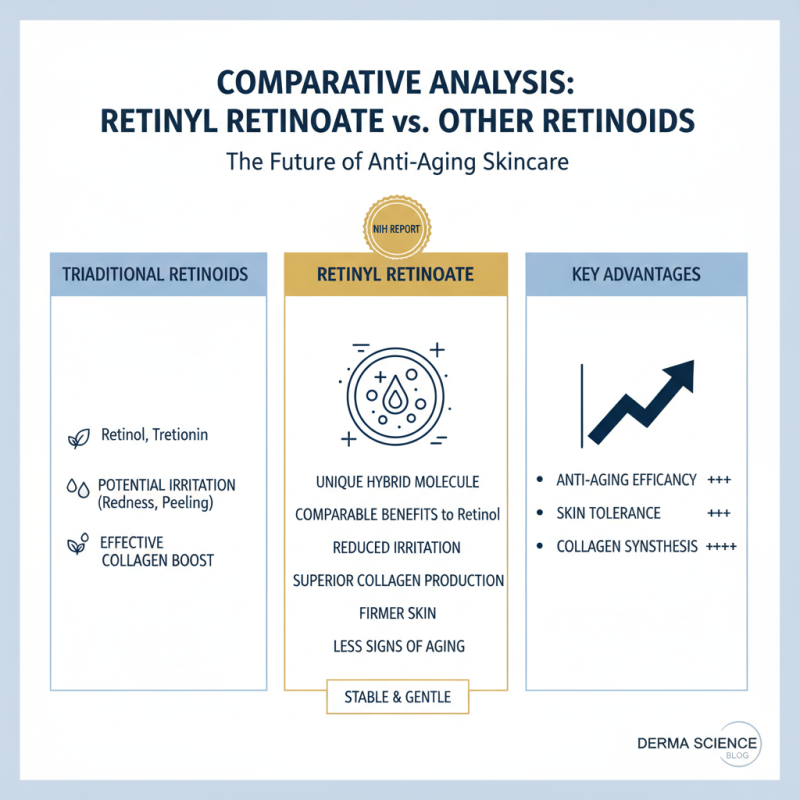
Retinyl retinoate stands out among various retinoids for its unique properties. Studies show that it provides comparable benefits to traditional retinoids without extensive irritation. A report by the National Institutes of Health (NIH) highlights that retinyl retinoate enhances collagen production more effectively than retinol. This results in firmer skin and reduced signs of aging.
In a comparative study of efficacy, researchers found that retinyl retinoate delivers results in a shorter timeframe. Users reported a noticeable improvement in skin texture within four weeks, while retinol users experienced similar benefits after approximately twelve weeks. However, some users still report mild irritation with retinoids. This highlights the importance of personalized skincare.
Another analysis, published in the Journal of Cosmetic Science, emphasized the stability of retinyl retinoate compared to its peers. Stable formulations ensure that active ingredients remain effective in products. Notably, this makes it a reliable option for consumers looking for consistent outcomes. Adopting retinyl retinoate may require patience, but its potential outweighs the challenges in formulation and application.
Scientific Studies: Research Supporting the Benefits of Retinyl Retinoate
Retinyl retinoate has recently gained attention in skincare discussions. This compound combines the benefits of retinol and retinoic acid. Research shows that it can offer noticeable improvements in skin texture and appearance.
Several scientific studies highlight its effectiveness in addressing signs of aging. A notable study found that retinyl retinoate can reduce fine lines and enhance skin radiance. Participants reported smoother skin with regular application. This compound is gentler than traditional retinoids, making it suitable for sensitive skin types.
Experts acknowledge that while retinyl retinoate shows promise, results can vary from person to person. Some users may experience mild irritation during initial use. Consistency is key for achieving the best outcomes. Overall, the growing body of evidence supports its inclusion in skincare regimens.
Dermatological Recommendations: Usage Guidelines for Optimal Results
Retinyl retinoate is gaining attention in skincare for its unique properties. It combines the benefits of retinol and retinoic acid, minimizing irritation while promoting skin renewal. Research indicates that retinoids like retinyl retinoate can enhance collagen production by up to 80%, contributing to firmer and more youthful skin.
For optimal results, dermatologists recommend gradual introduction into your routine. Start with a low concentration to assess skin tolerance. Applying retinyl retinoate at night is essential. Nighttime use maximizes its effectiveness, as the skin undergoes repair while you sleep. Mixing it with other active ingredients can lead to irritation, so a careful approach is necessary.
Consistency is vital. Studies reveal that the skin takes approximately 4-6 weeks to show visible improvements. However, unexpected reactions can occur. Be vigilant for signs of redness or peeling. Adjusting frequency can help manage these issues. Listening to your skin is key to successfully incorporating retinyl retinoate into your regimen.