Retinyl Retinoate Benefits and Tips for Glowing Skin You Need to Know
In the ever-evolving world of skincare, Retinyl Retinoate has emerged as a game-changer in the quest for radiant and youthful skin. According to Dr. Sarah Johnson, a leading expert in dermatology, "Retinyl Retinoate is a powerful ingredient that bridges the gap between traditional retinol and retinoids, offering the benefits of both while minimizing irritation." This formulation not only aids in reducing fine lines and improving skin texture but also enhances overall complexion, making it a must-have for anyone seeking to achieve a glowing appearance.
Retinyl Retinoate works effectively by promoting cell turnover and stimulating collagen production, resulting in smoother and firmer skin. Its unique properties make it an ideal choice for those with sensitive skin, as it is known to be gentler compared to other retinoids. As we delve deeper into the benefits of Retinyl Retinoate, we'll explore essential tips and techniques to incorporate this remarkable ingredient into your skincare routine, ensuring that your path to luminous skin is both effective and safe. Embrace the transformative power of Retinyl Retinoate and unlock the secret to vibrant, youthful skin.

What is Retinyl Retinoate and How Does It Work?
Retinyl retinoate is a derivative of vitamin A that combines the benefits of retinol and retinoic acid while minimizing irritation commonly associated with stronger retinoids. This compound works by promoting cell turnover, which helps to slough off dead skin cells and reveal a brighter, more youthful complexion underneath. By stimulating collagen production, retinyl retinoate can improve skin texture, reducing the appearance of fine lines and wrinkles, providing the skin a smoother and more radiant look.
The mechanism through which retinyl retinoate operates involves binding to specific receptors in the skin, influencing gene expression related to skin health. This process not only enhances the skin's natural regeneration but also aids in the fading of hyperpigmentation and uneven skin tone. With consistent use, individuals can expect to see improvements in skin clarity and a reduction in breakouts, making retinyl retinoate a multifunctional ingredient for those seeking glowing, healthy skin.
Retinyl Retinoate Benefits and Tips for Glowing Skin
| Benefit |
Description |
Usage Tips |
| Improves Skin Texture |
Retinyl Retinoate helps in smoothing out rough texture by promoting cell turnover. |
Incorporate slowly into your routine to avoid irritation. |
| Reduces Fine Lines |
This compound reduces the appearance of fine lines and wrinkles by stimulating collagen production. |
Use at night for best results, and pair with sun protection. |
| Enhances Skin Tone |
Helps to even out skin tone by reducing pigmentation and dark spots. |
Apply after cleansing and before moisturizing. |
| Boosts Radiance |
Promotes a more radiant and youthful complexion. |
Consider layering with hydrating serums for extra glow. |
| Antioxidant Properties |
Provides protection against free radicals, keeping skin healthy. |
Combine with other antioxidants for enhanced protection. |
Key Benefits of Retinyl Retinoate for Skin Health
Retinyl retinoate, a derivative of vitamin A, has become an essential ingredient in the skincare realm due to its remarkable benefits for skin health. One of its primary advantages is its ability to accelerate cell turnover, which helps to shed dead skin cells and promote the growth of new ones. This process not only enhances the skin's texture but also contributes to a more radiant complexion. By encouraging regular renewal of skin cells, retinyl retinoate can diminish the appearance of fine lines and wrinkles, making it a favorable choice for those seeking youthful, glowing skin.
In addition to its anti-aging properties, retinyl retinoate is known for its effectiveness in improving skin tone and reducing pigmentation issues. By inhibiting melanin production, it can help to even out uneven skin tone and minimize dark spots caused by sun damage or hormonal changes. Furthermore, this ingredient also exhibits anti-inflammatory properties, which can aid in calming acne-prone skin and reducing redness.
Incorporating retinyl retinoate into your skincare routine can lead to healthier-looking skin, helping you achieve that sought-after glow while addressing various skin concerns.
Tips for Incorporating Retinyl Retinoate into Your Skincare Routine
Incorporating retinyl retinoate into your skincare routine can significantly enhance your skin's texture and overall vibrancy. This compound, known for its ability to promote cell turnover and stimulate collagen production, can be seamlessly integrated into your regimen. Start by introducing it gradually; applying it once or twice a week allows your skin to adjust without overwhelming it. As your skin acclimates, you can increase the frequency to see optimal benefits.
When using retinyl retinoate, it's essential to apply it during your evening routine after cleansing and before moisturizing. This timing helps to minimize potential sensitivity and allows the active ingredient to work overnight. Pairing it with a gentle moisturizer can help hydrate the skin and counteract any dryness that might occur during the adjustment period. Additionally, remember to incorporate sunscreen in the morning, as retinoids can make your skin more sensitive to sun exposure. With patience and consistent use, you’ll likely notice a more radiant complexion and improved skin texture.
Benefits of Retinyl Retinoate for Glowing Skin
This bar chart illustrates the benefits of incorporating Retinyl Retinoate into your skincare routine. The data includes the percentage of users reporting improvements in various skin concerns after consistent use of Retinyl Retinoate over three months.
Potential Side Effects and Precautions with Retinyl Retinoate
Retinyl retinoate, a derivative of vitamin A, has gained popularity for its potential to promote healthy, glowing skin. However, it is essential to consider the potential side effects and precautions associated with its use. Research indicates that while retinoids can significantly improve skin texture and reduce signs of aging, they may also cause initial irritation, including redness, peeling, and dryness. A study published in the Journal of Cosmetic Dermatology noted that approximately 25% of users experienced mild to moderate irritation during the initial weeks of application, underscoring the importance of introducing retinyl retinoate gradually into a skincare routine.
To mitigate adverse effects, dermatologists recommend a few precautionary measures. First, users should start with a lower concentration and apply it every other night or just a few times a week, allowing the skin to acclimate. Additionally, incorporating a good moisturizer can help alleviate dryness and maintain skin hydration levels. According to the American Academy of Dermatology, consistent use paired with sun protection is crucial, as retinoids can increase skin sensitivity to UV rays. Long-term studies have shown that with proper care, individuals can achieve up to 80% improvement in fine lines and skin texture without severe side effects, highlighting the importance of understanding one’s skin tolerance before diving into the use of retinyl retinoate.
Comparing Retinyl Retinoate to Other Retinoids in Skincare
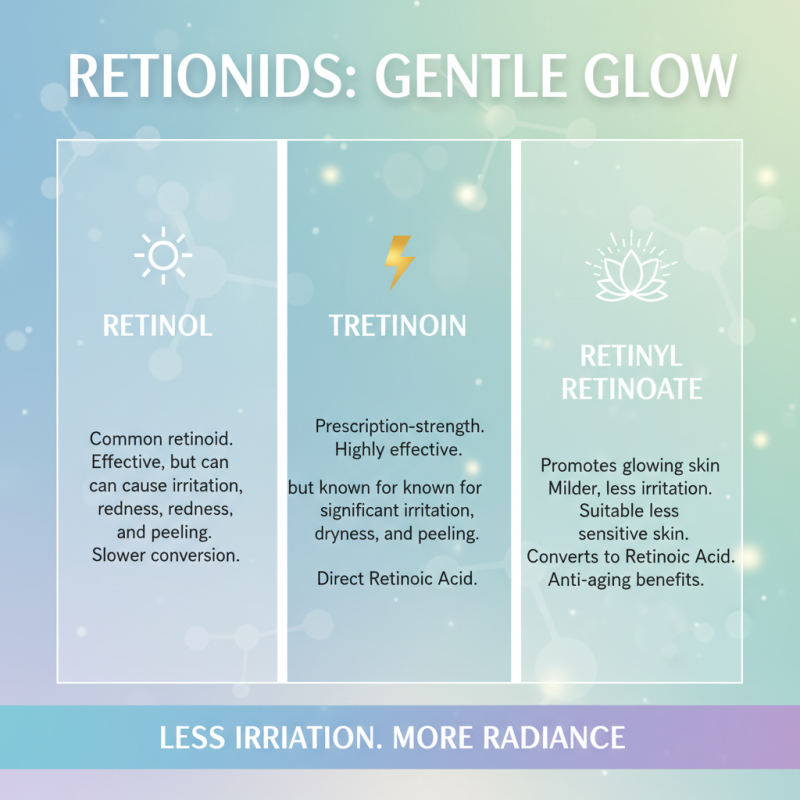
Retinyl Retinoate is a lesser-known yet effective member of the retinoid family that has gained attention for its ability to promote glowing skin. When comparing it to other retinoids such as Retinol and Tretinoin, one of the main advantages of Retinyl Retinoate is its gentler formulation. Unlike Retinol, which can sometimes cause irritation and peeling, Retinyl Retinoate is milder, making it suitable for those with sensitive skin who wish to reap the benefits of retinoids without excessive discomfort. It works by converting into Retinoic Acid in the skin, offering similar anti-aging effects without the harsh side effects typically associated with stronger retinoids.
Another important aspect to consider is how Retinyl Retinoate compares in efficacy to Tretinoin, the prescription-grade retinoid. While Tretinoin is recognized for its rapid results in treating acne and reducing fine lines, it can lead to significant irritation for some users. In contrast, Retinyl Retinoate provides a balanced approach, aiming for gradual improvement in skin texture and tone. It promotes collagen production and cell turnover, which are essential for achieving that youthful glow. Additionally, as it is less irritating, it encourages consistent use, allowing the skin to adapt and minimize potential adverse reactions while effectively delivering the benefits of retinoids.