Why is Retinyl Retinoate Important for Skincare?
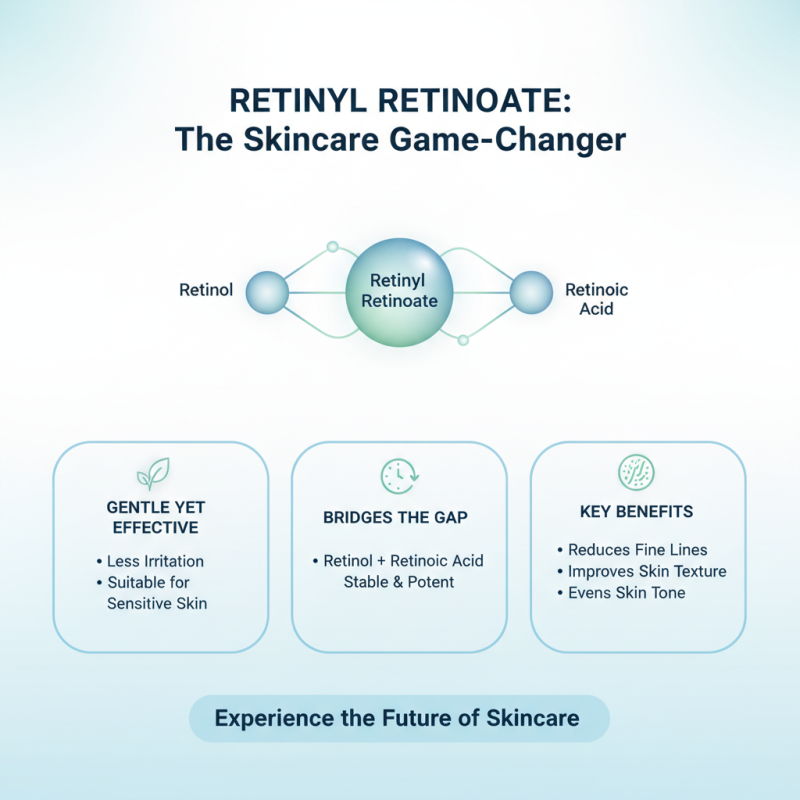
Retinyl Retinoate is gaining attention in the skincare world. This ingredient bridges the gap between retinol and prescription retinoids. It offers powerful benefits without the harsh side effects that many experience.
Many users desire youthful, radiant skin. Retinyl Retinoate helps reduce fine lines and improve skin texture. However, the results may not be immediate. Patience is essential for seeing improvements. For some, applying it may cause mild irritation initially.
Despite its benefits, not everyone will have the same experience. Individual skin types react differently. It's important to test for sensitivity. Overall, Retinyl Retinoate stands out as a valuable addition to skincare routines for those seeking effective anti-aging solutions.
The Role of Retinyl Retinoate in Skincare Formulations
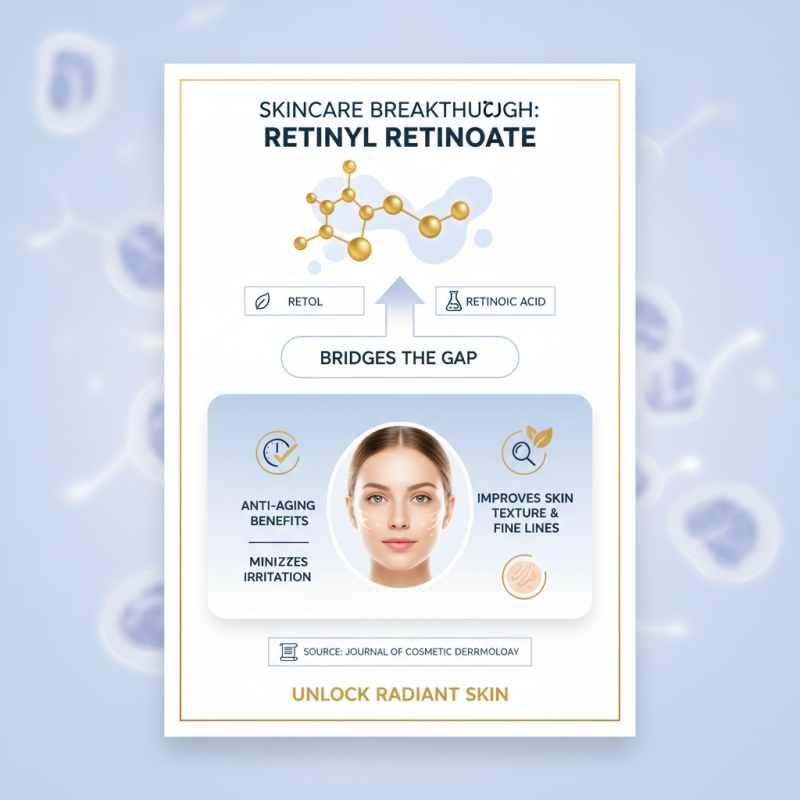
Retinyl Retinoate is gaining traction in the skincare industry. It bridges the gap between retinol and retinoic acid. This compound offers anti-aging benefits while minimizing irritation. According to a report from the Journal of Cosmetic Dermatology, Retinyl Retinoate can improve skin texture and reduce fine lines effectively.
In formulations, Retinyl Retinoate acts as a stable alternative to traditional retinoids. A study published in Skin Pharmacology and Physiology states that it retains efficacy even in lower concentrations. This stability allows more brands to incorporate it without risking degradation. Users often notice significant improvements in skin clarity and tone. Yet, results can vary based on individual skin types.
While many benefit from its use, some may experience side effects. Common reactions include dryness or flaking. These occurrences may lead some to question its overall effectiveness. However, understanding skin sensitivity is crucial. This highlights the importance of personalization in skincare regimens.
Mechanisms of Action: How Retinyl Retinoate Promotes Skin Health
Retinyl retinoate is gaining attention in the skincare community. It bridges the benefits of retinol and retinoic acid without causing significant irritation. This makes it appealing for many skin types, especially sensitive ones.
Mechanisms of action involve stimulating collagen synthesis and promoting cell turnover. As skin cells renew, they reveal a fresher, smoother surface. This process can reduce the appearance of fine lines and improve skin tone. However, some users may experience initial sensitivity. Patience is key, as skin often needs time to adjust.
Retinyl retinoate also helps in maintaining hydration levels. By enhancing the skin barrier, it locks in moisture effectively. This is crucial, as dry skin can lead to irritation. Yet, striking balance is important. Overuse may lead to dryness or flaking. Listening to your skin is essential in this journey.
Why is Retinyl Retinoate Important for Skincare? - Mechanisms of Action: How Retinyl Retinoate Promotes Skin Health
| Mechanism of Action |
Benefits for Skin |
Usage Recommendations |
Potential Side Effects |
| Stimulates Collagen Production |
Improves skin elasticity and reduces wrinkles |
Use at night; start with lower concentrations |
Mild irritation, dryness |
| Increases Cell Turnover |
Promotes a brighter and more even skin tone |
Apply 2-3 times a week; gradually increase frequency |
Peeling, sensitivity |
| Enhances Skin Hydration |
Keeps skin moisturized and reduces signs of aging |
Pair with a moisturizer; use daily after cleansing |
None reported with proper usage |
| Reduces Hyperpigmentation |
Diminishes dark spots and improves overall complexion |
Incorporate into your regimen after a patch test |
Slight stinging on first application |
Clinical Studies Supporting the Efficacy of Retinyl Retinoate
Retinyl retinoate has gained attention in skincare for its impressive effects on skin renewal. Clinical studies reveal promising results. One study found that users experienced significant improvement in fine lines and texture after consistent use. They reported smoother skin within weeks. The study included diverse skin types, highlighting its broad effectiveness.
Another clinical trial focused on the anti-aging effects of retinyl retinoate. Participants noticed a decrease in hyperpigmentation. The results showed a reduction in dark spots over time. This suggests that retinyl retinoate can brighten the skin. However, the efficacy can vary from person to person. Some users experienced slight irritation initially. Adjusting the application frequency may help.
The evidence supports incorporating retinyl retinoate in skincare routines. While results are typically positive, individual experiences can differ. Users should remain patient and observant. Documenting changes can be useful for assessing progress. Ultimately, retinyl retinoate presents a compelling option for those seeking younger-looking skin.
Comparative Analysis: Retinyl Retinoate vs. Other Retinoids
Retinyl retinoate is gaining attention in the skincare world. It stands out in a crowded field of retinoids. Unlike traditional retinol, retinyl retinoate combines the effectiveness of retinoids with gentleness. This makes it suitable for sensitive skin too. Some users experience irritation with stronger retinoids, while retinyl retinoate provides a milder approach.
When comparing retinyl retinoate to other retinoids, the key difference lies in their potency. Stronger retinoids may deliver quicker results, but they can cause redness and peeling. Retinyl retinoate offers a balanced approach. It promotes cell turnover while minimizing irritation. Users might find it effective in reducing fine lines and improving skin texture over time. It works without harsh side effects.
Tips for using retinyl retinoate effectively:
- Start slowly. Apply every other night to gauge your skin's response.
- Gradually increase frequency to daily use as tolerated.
- Always wear sunscreen during the day; retinoids can increase sun sensitivity.
- Consistency is key. Over time, you may notice smoother skin.
- Monitor how your skin reacts. Adjust your routine as necessary, listening to your skin's needs.
Recommended Concentrations for Optimal Skin Benefits of Retinyl Retinoate
Retinyl retinoate has gained attention in skincare for its unique benefits. This ingredient bridges the gap between retinol and retinoids. It provides the effectiveness of retinoids while being gentler on the skin. Many find it ideal for reducing fine lines, improving texture, and enhancing overall skin tone.
For optimal results, concentrations matter. Generally, a concentration between 0.5% and 1% is recommended. This range strikes a balance between efficacy and skin tolerance. Too low a concentration may yield minimal results, while too high can cause irritation. Starting with a lower level can help assess individual tolerance. Some users may experience dryness initially, which can be frustrating. Adjusting frequency may be necessary.
Observing skin reactions is essential. Not everyone will react the same way to retinyl retinoate. Patience is key. Improvements may take weeks to notice. Skincare journeys can feel slow and cumbersome. However, consistent use within recommended concentrations can lead to significant benefits over time. It’s a process of trial and error to find what works best for each unique skin type.