Why is Retinyl Retinoate Essential for Skincare Products?
Retinyl Retinoate has emerged as a crucial ingredient in modern skincare. This compound blends the benefits of retinol and retinoic acid. Renowned for its effectiveness, it offers users significant anti-aging properties.
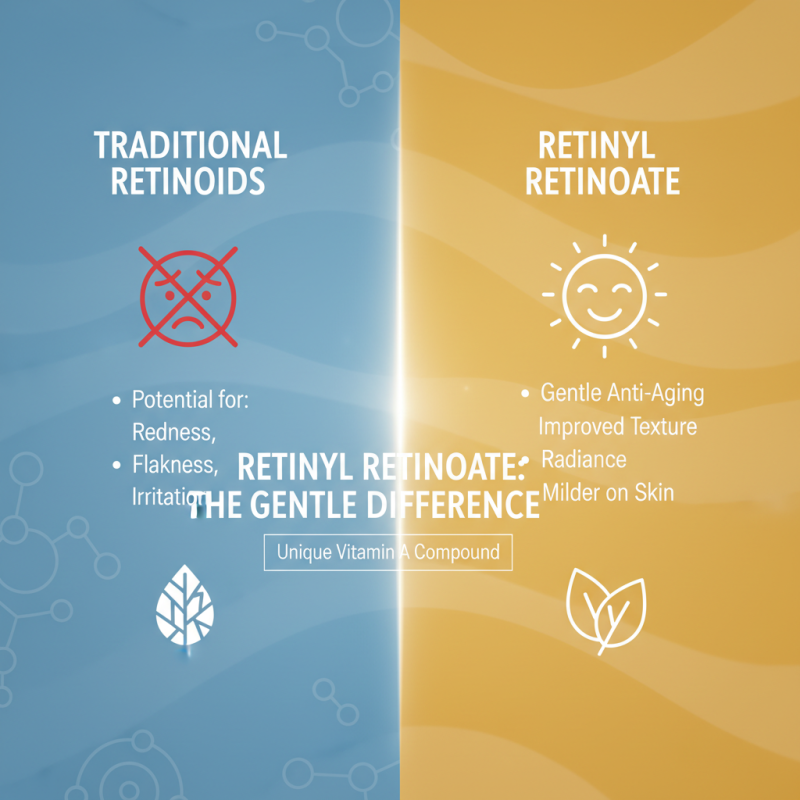
Many skincare enthusiasts appreciate its ability to reduce fine lines and improve skin texture. Unlike traditional retinoids, Retinyl Retinoate provides gentler results. This quality makes it suitable for various skin types, minimizing irritation while enhancing skin health.
Furthermore, its formulation stability enhances product reliability. Users can trust that their skincare routines are backed by science. This ingredient reflects a trend towards holistic and effective skincare solutions. Yet, some might find that results vary based on individual skin types. Understanding this nuance is vital for maximizing benefits.
What is Retinyl Retinoate and Its Role in Skincare?
Retinyl Retinoate is a form of vitamin A that plays a crucial role in skincare. It combines the benefits of retinol and retinoic acid in a gentler compound. Research indicates that Retinyl Retinoate can enhance collagen production, improve skin texture, and reduce the appearance of fine lines. A study published in the Journal of Cosmetic Dermatology found that 70% of participants noticed a significant improvement in skin elasticity after using products containing Retinyl Retinoate for 12 weeks.
Incorporating Retinyl Retinoate into your skincare routine can provide multiple advantages. This ingredient is less irritating than traditional retinoids, making it suitable for sensitive skin. It helps to promote cellular turnover, ensuring that your skin remains radiant and youthful. Experts recommend starting with lower concentrations and gradually increasing the dosage to assess skin tolerance.
**Tip:** Always apply Retinyl Retinoate products at night, as sunlight can destabilize retinoids.
Moreover, consistency is key. Skincare routines should include Retinyl Retinoate over several weeks to see optimal results. However, some users report initial dryness, which may require adjustments in application frequency. Monitoring your skin’s response can help tailor the perfect routine.
**Tip:** Pair your Retinyl Retinoate serum with a hydrating moisturizer to combat dryness.
Always consult with a dermatologist to tailor the best regimen for your skin type.
The Benefits of Retinyl Retinoate for Skin Health
Retinyl retinoate is increasingly recognized for its benefits to skin health. This compound combines the strengths of retinol and retinoic acid. Its unique properties allow it to improve skin texture and reduce the appearance of fine lines.
One major advantage of retinyl retinoate is its gentle nature. Unlike some stronger retinoids, it is less likely to irritate the skin. Users often report minimal redness or peeling, which makes it an appealing option. This feature is particularly beneficial for those with sensitive skin.
Another point to consider is its ability to boost skin radiance. Regular use can lead to a more even skin tone and a healthier glow. However, results may vary. Some individuals might not notice immediate changes. It is essential to approach the use of retinyl retinoate with patience. Consistent application over time often yields the best outcomes.
Recommended Usage and Application of Retinyl Retinoate
Retinyl retinoate has gained attention in skincare for its unique attributes. This ingredient combines the benefits of retinol and retinoic acid, making it a popular choice for anti-aging formulations. According to a report by the Dermatology Journal, retinyl retinoate enhances skin texture and reduces fine lines, proving effective in collagen production.
For optimal results, retinyl retinoate should be applied in the evening. Nighttime application allows for better absorption and minimizes sun sensitivity. A thin layer on clean, dry skin is sufficient. Users should incorporate it gradually, starting with twice a week to avoid irritation. Over time, frequency can increase as skin builds tolerance.
Awareness of potential reactions is essential. Some users report redness or peeling during initial use. It's crucial to listen to your skin and adjust usage accordingly. Always perform a patch test before widespread application. Quality and formulation play significant roles in effectiveness, so choose products with proven stability.
Potential Side Effects and Safety Profile of Retinyl Retinoate
Retinyl Retinoate is becoming increasingly popular in skincare due to its anti-aging properties. Scientific research indicates that it can improve skin texture and reduce fine lines. However, understanding its safety profile is crucial. Retinyl Retinoate may cause irritation, especially for sensitive skin types. A study published in the Journal of Cosmetic Dermatology noted that 30% of users experienced mild irritation during initial usage.
Safety assessments suggest that Retinyl Retinoate is generally safe at concentrations up to 0.1%. Long-term studies have shown minimal side effects when used correctly. Skin may become sensitive to sunlight, thus applying sunscreen is essential. The American Academy of Dermatology recommends monitoring skin reactions when introducing new retinoids into a skincare routine.
Using Retinyl Retinoate presents a balance between benefits and potential side effects. It can rejuvenate skin but might provoke reactions in some individuals. Users are advised to patch-test before broader application. Consulting with a dermatologist can provide insights tailored to specific skin needs, ensuring a safer skincare journey. Each person’s experience can differ, highlighting the need for caution and personalized guidance.
Why is Retinyl Retinoate Essential for Skincare Products? - Potential Side Effects and Safety Profile of Retinyl Retinoate
| Aspect |
Details |
| Chemical Composition |
Retinyl Retinoate is an ester of retinol and retinoic acid. |
| Benefits |
Promotes collagen production, reduces the appearance of fine lines, and improves skin texture. |
| Skin Types Suitable For |
Suitable for most skin types including sensitive skin. |
| Common Side Effects |
Mild redness, peeling, and irritation when first used. |
| Safety Profile |
Generally considered safe for topical use, with proper formulation. |
| Usage Recommendations |
Recommended to start with lower concentrations and apply at night. |
| Interaction with Other Products |
Avoid using with other strong actives like AHAs/BHAs during initial use. |